

Ordering extruded plastic profiles in bulk sounds simple at first. Send a drawing, approve the sample, place the order, and wait for delivery. But in real manufacturing projects, things rarely stay that easy.
I have seen companies lose weeks of production time because profile dimensions were slightly off. In some cases, the material looked fine initially but started warping after installation. Sometimes the profile worked perfectly during sampling but failed during repeat production because the supplier could not maintain consistency.
That is why choosing the right partner for plastic extrusion profile solutions in India matters more than many buyers realise. Bulk orders are not just about pricing. They are about repeat accuracy, material stability, tooling quality, and long-term production support.
If you are planning to order custom profiles for industrial or commercial use, here are the key things you should always check before moving forward.
What Are Extruded Plastic Profiles?
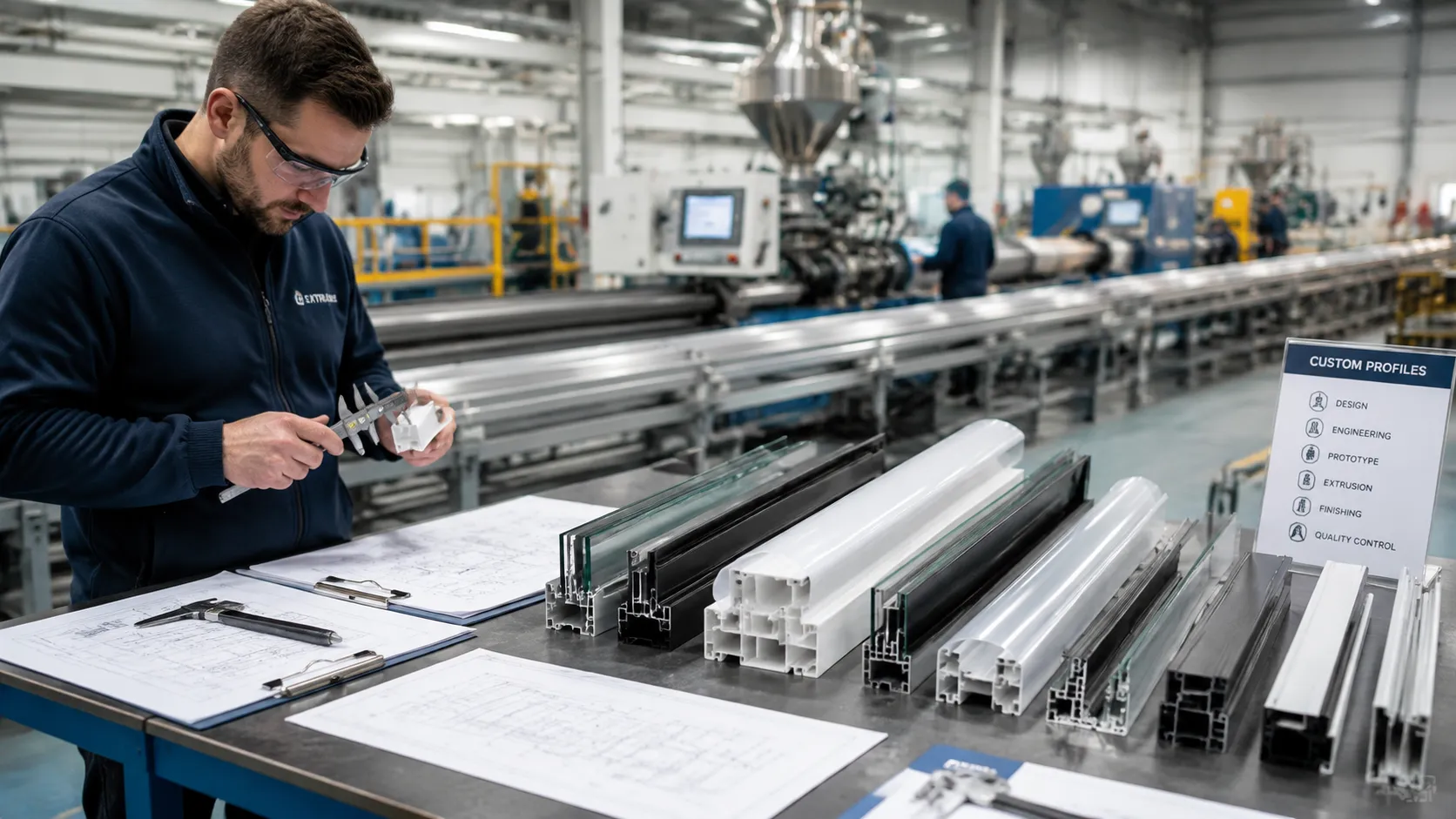
Extruded plastic profiles are custom-shaped plastic components made through the extrusion process. Heated plastic material is pushed through a specially designed die to create continuous profile shapes.
These profiles are widely used in:
- Commercial refrigeration
- LED lighting systems
- Façade glazing
- Window systems
- Furniture manufacturing
- Electrical applications
- Industrial machinery
Most industrial buyers prefer custom extruded plastic profiles because they can match exact technical requirements and assembly needs.
Why Bulk Orders Need More Attention
Small sample orders can hide production problems.
Bulk extrusion profile manufacturing is very different because:
- production runs are longer
- material consistency becomes critical
- profile tolerances matter more
- repeat quality affects assembly lines
One bad production batch can affect an entire project timeline.
Honestly, this is where many buyers make mistakes. They focus heavily on cost but ignore process capability and repeat production support.
In my opinion, consistency is usually more valuable than getting the cheapest profile rate.
1. Check Material Selection Carefully
Material choice directly affects performance, durability, flexibility, and thermal stability.
A good plastic extrusion profile manufacturer should guide you properly based on the application.
Common materials include:
| Material | Common Uses |
|---|---|
| PVC | Window profiles, refrigerator profiles |
| Polycarbonate | LED diffuser covers |
| ABS | Industrial components |
| Acrylic | Display and lighting profiles |
| HDPE | Industrial protection profiles |
The wrong plastic material selection often causes the following:
- cracking
- yellowing
- heat deformation
- fitting issues
- reduced product life
For example, I have seen low-grade PVC profiles become brittle much faster in outdoor façade systems exposed to sunlight.
2. Review Plastic Profile Dimensions Properly
Even small size variations can create major assembly problems.
Always confirm:
- wall thickness
- corner radius
- fitting dimensions
- profile straightness
- tolerance range
Profile extrusion tolerances are especially important for:
- sliding systems
- commercial glazing
- LED housing assemblies
- refrigeration doors
One common issue in bulk orders is that the first few samples look perfect, but dimensions slowly drift during long production runs.
A reliable OEM plastic extrusion supplier will have proper quality monitoring systems in place.
3. Ask About Tooling Capability
The extrusion die plays a huge role in profile quality.
Poor tooling design creates the following:
- uneven surfaces
- shape instability
- weak corners
- inconsistent sizing
Good extrusion tooling support usually includes the following:
- die optimisation
- testing support
- sample correction
- repeat tooling maintenance
This becomes even more important for extruded plastic profiles for complex designs where multiple chambers, curves, or locking sections are involved.
Complex profiles need experienced die development, not just standard extrusion machines.
4. Understand Repeat Production Capability
This is one area many buyers overlook.
Can the supplier maintain the same profile quality after six months or one year?
Bulk orders are rarely one-time projects. Most industrial buyers need repeat production profiles with consistent specifications.
Ask questions like:
- Can they match colour consistency?
- Do they maintain production records?
- How do they control dimensional variation?
- What quality checks are done during production?
A strong industrial extrusion solutions provider will already have systems for repeat manufacturing control.
5. Check Surface Finish Quality
Surface quality affects both function and appearance.
Bad surface finishing may lead to:
- rough texture
- visible flow lines
- uneven gloss
- scratches
- assembly fitting issues
This is especially important for:
- façade systems
- LED profiles
- visible commercial components
Technical plastic extrusion profiles should have consistent finishing across every production batch.
6. Evaluate Production Capacity
Many suppliers handle small orders well but struggle with bulk industrial manufacturing supply.
Before placing large orders, check:
- monthly production capability
- lead times
- raw material availability
- packaging standards
- dispatch systems
I have personally seen projects delayed because suppliers accepted bulk orders they were not actually ready to handle.
Reliable suppliers usually give realistic timelines instead of promising impossible delivery dates.
7. Confirm Quality Control Process
Quality checks for extruded plastic profiles should happen throughout production, not only at final inspection.
A good process usually includes:
Incoming Material Checks
Raw material quality verification.
In-Process Inspection
Dimension and surface checks during extrusion.
Final Inspection
Packaging and profile consistency verification.
This reduces rejection rates during assembly.
8. Check Application Experience
Different industries need different extrusion expertise.
For example:
- Refrigerator door profiles need sealing consistency
- LED diffuser profiles need optical clarity
- Façade profiles need thermal stability
- Industrial machine profiles need structural strength
A custom plastic extrusion manufacturer with real application experience usually gives better technical support during development.
9. Packaging Matters More Than People Think
Improper packaging damages profiles during transport.
Long profiles may bend, scratch, or deform if not packed properly.
Good packaging should include:
- protective wrapping
- length support
- moisture protection
- safe stacking methods
This becomes critical during export shipments and large commercial projects.
10. Compare More Than Just Price
This is probably the most important advice I can give.
Cheap profiles often become expensive later.
Low-cost suppliers may compromise on:
- raw materials
- tolerance control
- tooling maintenance
- quality inspection
What usually works better is finding a supplier who offers stable quality and long-term production support.
That is why many industrial buyers work with companies like M3 Extrusion for industrial plastic profile manufacturing solutions where repeat consistency and custom development are important for ongoing production.
Signs of a Reliable Plastic Extrusion Supplier
Here are some practical signs buyers should look for.
Good Suppliers Usually:
- ask technical questions
- review drawings carefully
- discuss material options
- explain tolerance limitations
- provide realistic timelines
- support custom profile development
Weak Suppliers Usually:
- focus only on pricing
- avoid technical discussions
- promise everything quickly
- lack quality documentation
- struggle with repeat production consistency
From experience, technical communication tells you a lot about a supplier.
Common Problems Buyers Face in Bulk Orders
| Problem | Main Cause |
|---|---|
| Profile size variation | Poor process control |
| Warping | Incorrect material selection |
| Colour mismatch | Inconsistent raw materials |
| Surface defects | Weak tooling or process settings |
| Assembly fitting issues | Incorrect tolerances |
| Delayed supply | Poor production planning |
Quick Checklist Before Ordering Extruded Plastic Profiles
Before placing a bulk order, confirm:
- Material specifications
- Tolerance limits
- Surface finish expectations
- Tooling ownership terms
- Packaging standards
- Quality inspection methods
- Production lead time
- Repeat production capability
This simple step avoids many future problems.
Final Thoughts
Bulk ordering extruded plastic profiles is not just about manufacturing. It is about long-term production reliability.
The right supplier helps maintain consistency, supports custom development, and reduces production risks during repeat manufacturing.
In most industrial applications, stable quality usually matters more than getting the lowest quotation.
A well-managed extrusion process, accurate tooling, proper material selection, and strong quality control can save both time and operational cost over the long run.
FAQs
What should I check before ordering extruded plastic profiles in bulk?
You should check material quality, profile dimensions, tolerance limits, tooling capability, production consistency, and packaging standards. Bulk production requires stable quality across every batch, so repeat manufacturing capability is just as important as the initial sample approval.
Why are profile extrusion tolerances important?
Profile extrusion tolerances help ensure proper fitting during assembly. Even small dimensional variations can create installation problems in commercial glazing, refrigeration systems, and industrial equipment. Tight tolerance control improves consistency and reduces rejection during production.
How do I choose the right plastic extrusion profile manufacturer?
Look for a manufacturer with industrial application experience, proper quality control systems, tooling support, and repeat production capability. Good suppliers usually discuss technical requirements clearly and provide realistic production timelines instead of focusing only on price.
Which materials are commonly used in extruded plastic profiles?
PVC, polycarbonate, ABS, acrylic, and HDPE are commonly used materials. The right material depends on the application, environmental conditions, flexibility needs, and thermal performance requirements. Material selection plays a major role in product durability and performance.
Why do bulk plastic profile orders sometimes fail?
Bulk orders often fail because of inconsistent dimensions, poor material quality, weak tooling design, or lack of process control during long production runs. In many cases, suppliers can produce good samples but struggle to maintain consistency during repeat manufacturing.
What industries use custom extruded plastic profiles?
Custom extruded plastic profiles are widely used in refrigeration systems, façade glazing, LED lighting, furniture manufacturing, electrical systems, and industrial machinery. These profiles are designed to match specific assembly and performance requirements for commercial applications.
Why is repeat production capability important in extrusion manufacturing?
Repeat production capability ensures that every production batch matches previous specifications. This is important for OEM manufacturers and industrial assembly lines where dimensional consistency, colour matching, and profile stability directly affect production efficiency and product quality.
